Types of Carpet Padding: Which Pad Belongs Under Which Carpet in a West Michigan Home
- The five types of carpet padding sold for homes are rebond, memory foam, fiber (felt), rubber, and moisture-barrier pad, which is a rebond or foam pad with a sealed top film.
- Thickness and density matter more than softness. A pad that is too thick or too soft lets the carpet backing flex and wear early.
- Stairs and loop carpets need a thinner, firmer pad than a plush bedroom carpet.
- Carpet over a basement slab or in a home with pets is where a moisture-barrier pad earns its place.
- The carpet manufacturer’s warranty sets the pad requirements, so the pad is chosen after the carpet, not before.
Carpet padding, also called carpet cushion or carpet pad, is the layer between the carpet and the subfloor. It absorbs the impact of every step so the carpet backing does not have to, and it decides how the floor feels, how quiet the room stays, and how long the carpet holds its shape.
What Are the Main Types of Carpet Padding?
Five types of carpet padding cover almost every home: rebond, memory foam, fiber, rubber, and moisture-barrier pad. Rebond is the multicolored pad made from recycled foam and is the one installed most often. The others solve a specific problem, such as extra softness, a firm base for loop carpet, or protection from spills and damp concrete.
Rebond and memory foam are both urethane foams, which is why an estimate may list either one as a urethane pad.
| Pad type | What it is | Where it fits | What to watch |
|---|---|---|---|
| Rebond | Recycled urethane foam pieces bonded into a sheet | Bedrooms, living rooms, hallways, most stairs at the right density | Sold in many densities, and the lightest grades break down early |
| Memory foam (visco) | Urethane foam with a slow, cushioned response | Bedrooms and low-traffic rooms where softness is the goal | Can feel too soft under heavy traffic and on stairs |
| Fiber (felt) | Dense needled synthetic or natural fiber | Berber, loop, and low-profile carpet that needs a flat, firm base | Firm underfoot by design, with less cushion |
| Rubber (flat or waffle) | Solid or molded rubber sheet | Loop carpet and rooms with rolling loads | Heavier and less common in homes |
| Moisture-barrier pad | Rebond or foam with a sealed film on top | Basements over a slab, pet households, dining rooms | The film stops spills from soaking in but does not fix a wet slab |
How Thick and How Dense Should Carpet Padding Be?
Most residential cut-pile carpet belongs on a pad between 1/4 inch and 7/16 inch thick with a density of at least 6 pounds per cubic foot, which is the range the Carpet and Rug Institute points homeowners to. Loop and low-profile carpets need a thinner, firmer pad than that.
A thick, soft pad feels pleasant in a showroom and then works against the carpet at home. Every step pushes the carpet down into the pad, the backing bends, and the seams and the face fibers take the strain. A firmer pad at the right thickness keeps the carpet flat and stretched.
Density is the number to ask about. Two pads of the same thickness can feel alike under your hand and differ by years of service, and the density is printed on the pad specification sheet. The carpet warranty also lists the pad thickness and density it requires, so read that page before the pad is ordered.
Which Carpet Padding Is Right for Stairs?
Stairs need a thin, firm, dense pad. The carpet on a staircase is wrapped over the nose of each tread and takes the full weight of a person on a few square inches, so a thick or soft pad lets the carpet shift on the edge and wear through at the nosing first.
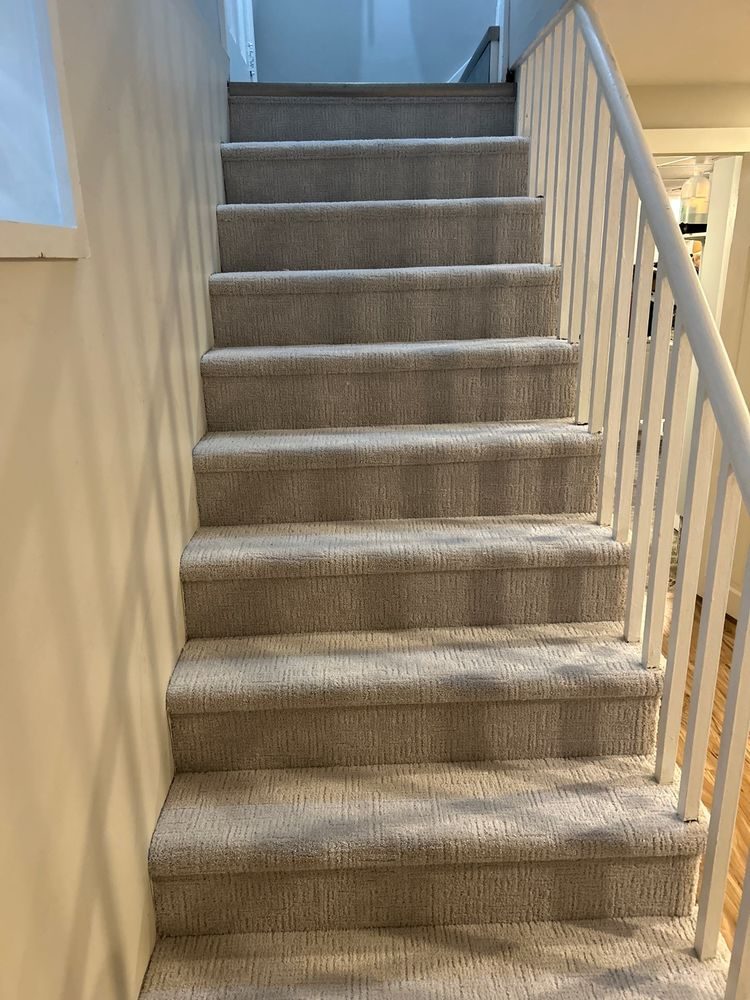
A Grand Rapids staircase our crew carpeted on November 11, 2026 shows why. The carpet is wrapped over every tread nose and turned around the open side of each step between the balusters. That wrap only stays tight when the pad underneath is firm enough to hold the edge, which is the reason a staircase and the bedroom beside it often have two different pads under the same carpet.
Which Padding Works Over a Basement Slab in West Michigan?
Carpet over a basement slab in West Michigan belongs on a moisture-barrier pad or a synthetic pad that does not hold water, installed only after the slab has been checked for moisture. Concrete near Lake Michigan and along the Grand River carries ground moisture through the humid months, and an ordinary pad can trap it under the carpet.
The barrier film on top of the pad keeps a spilled drink or a pet accident from soaking through to the pad and the slab. It is not a fix for a basement that takes on water. For a slab that tests damp, we steer the conversation toward waterproof plank instead, and our guide to basement flooring for Michigan homes explains that choice.
Which Padding Feels Best in a Bedroom?
A bedroom is the room where a softer pad makes sense: the traffic is light and the carpet is walked on in bare feet. A quality rebond or a memory foam pad at the thickness the carpet warranty allows gives a cushioned step without letting a plush carpet flex too far.
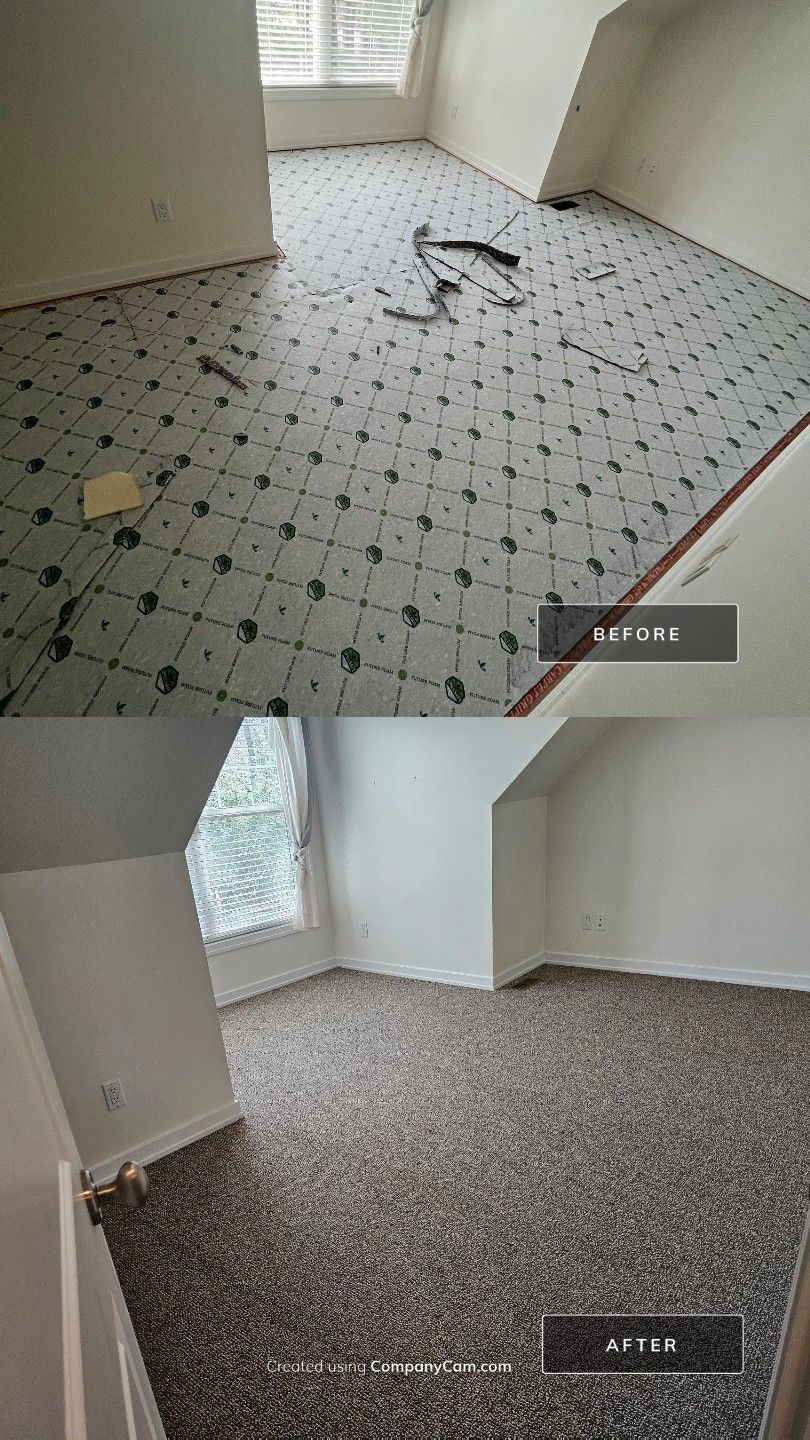
This Muskegon bedroom, carpeted by our crew in April 2026, is the kind of room where the pad is felt every morning. In bedrooms we match the pad to the carpet style first and then to how the homeowner wants the floor to feel underfoot.
What Should You Ask Before You Choose a Pad?
Ask four things before a pad is chosen: which pad thickness and density the carpet warranty requires, whether the room sits over concrete, whether the pad for the stairs differs from the pad for the rooms, and what pad is written on the estimate. A written pad specification is the only way to compare two carpet quotes fairly.
- The warranty. Ask what pad the carpet warranty requires. The carpet manufacturer sets the thickness and density limits.
- The subfloor. Ask what is under the room. Plywood and concrete call for different pads.
- The stairs. Ask which pad is going on the stairs. Stairs often need a different pad from the rooms.
- The estimate. Ask for the pad to be named on the estimate. Type, thickness, and density belong in writing.
How Does Freedom Flooring Choose the Pad?
Freedom Flooring & Design chooses the pad after the carpet, at the in-home estimate. Nolan brings carpet samples to the house, walks you through the pad options, and looks at the subfloor in each room. We install rebond, urethane, and moisture-barrier pads matched to the carpet and the room.
Ask for the pad type, thickness, and density to be written into the estimate. The pad is part of the same decision as the carpet fiber and style, which our West Michigan carpet buying guide covers from start to finish. More about how we install it is on the Carpet Installation page, and Grand Rapids homeowners can start at Carpet Installation in Grand Rapids.
Book a free in-home consultation at freedomflooringmi.com or call (269) 390-6747.
Frequently Asked Questions
What is the most common type of carpet padding? Rebond is the most common carpet padding in homes. It is made from recycled urethane foam bonded into a sheet, it comes in a range of densities, and at the right thickness and density it suits bedrooms, living rooms, hallways, and most stairs.
Is thicker carpet padding better? A thicker pad is not a better pad. A pad that is too thick or too soft lets the carpet backing flex with every step, which strains the seams and wears the carpet early. Most residential cut-pile carpet belongs on a pad between 1/4 inch and 7/16 inch thick, and loop carpet needs a thinner, firmer pad.
Do I need a moisture-barrier pad in a Michigan basement? A moisture-barrier pad is the right pad for carpet over a basement slab that has tested dry, and for homes with pets. The film on top keeps spills from reaching the pad and the concrete. It does not fix a slab that takes on water, where waterproof plank is the better floor.
Can I reuse my old carpet padding? New carpet belongs on new padding. An old pad has already compressed along the traffic paths and holds years of dust and spills, and the carpet warranty sets thickness and density limits that a worn pad no longer meets.
Ready to see it in your home?
Nolan brings flooring samples directly to you. Book a free in-home consultation -- West and Southwest Michigan.
Book Free Consultation